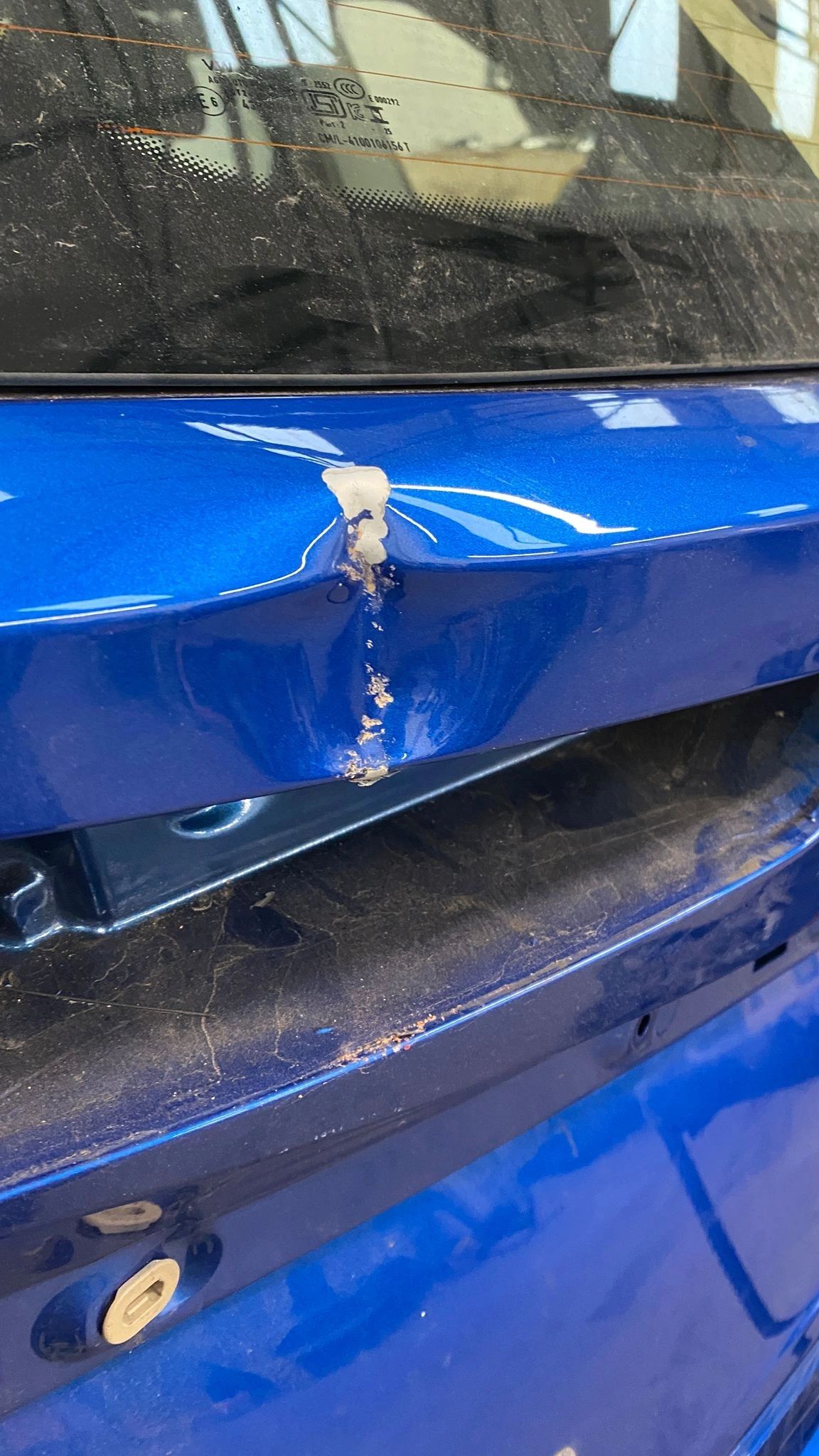
Every car leaves the factory with a paint colour code. It is a short string of letters and numbers that tells a bodyshop exactly which colour your car was sprayed in. If you are getting a scratch, scuff or panel sorted, that code is the first thing a painter wants, because it points to the right base colour before any matching begins. This guide shows you where the code usually hides on the common makes sold in the UK, how the codes tend to look, and what to do if you cannot find yours.
Why the paint code matters
There are thousands of car colours, and plenty of them look almost identical until you put two panels side by side in daylight. A name like 'silver' or 'metallic blue' is nowhere near enough to match against. The code narrows it down to one specific factory formula, which is the difference between a repair that disappears and one you can spot from across the car park.
It matters most on metallic and pearl finishes. Those colours contain flake and pearl particles that catch the light, and a small mismatch in the mix shows up badly. Starting from the correct code gives the painter the right recipe to work from before they fine-tune it to your actual car.
Where to find the colour code sticker
On most cars the code lives on a small sticker or plate, often next to the VIN or other build information. The usual places to check are:
- The driver's door shut or B-pillar. Open the driver's door and look at the edge of the door itself and the frame it closes against. This is the most common spot.
- Under the bonnet. Check the slam panel at the front, the inner wings, or the underside of the bonnet.
- The boot or spare wheel well. Lift the boot floor and look around the spare wheel area and the boot lid shut.
- The service book or handbook. Some manufacturers note the paint code in the paperwork that came with the car, or on a sticker inside the fuel filler flap.
The sticker often lists several codes together (the VIN, tyre pressures, a trim code and the paint code), so the trick is knowing which one is the colour. It is usually labelled with something like 'colour', 'paint', 'C/TR', 'farbe' or a small key symbol, and the paint code itself is normally shorter than the VIN.
Common makes sold in the UK
Exact locations move around between models and years, so treat these as the first places to check rather than a guarantee. If it is not where you expect, work through the other spots above.
- VW, Audi, SEAT and Skoda. The VW Group brands often print the code on a sticker in the boot, commonly in the spare wheel well or on the boot floor, and sometimes inside the service book. Look for a colour line on a sticker that also lists the VIN. Codes are frequently a letter and number mix such as LY9C or a colour name with a code beside it.
- BMW. Check the driver's door shut and under the bonnet. BMW colour codes are often three digits, sometimes with a letter, and the colour name usually sits next to the code.
- Mercedes-Benz. Look on the sticker in the door shut or under the bonnet. Mercedes codes are often a three-digit number, sometimes shown with a longer code, and may be listed against the word for colour.
- Ford. Common spots are the driver's door shut and the B-pillar sticker. Ford often gives the colour as a name with a code beside it.
- Vauxhall. Check the door shut and under the bonnet. Vauxhall codes are commonly a short numeric or letter-number code listed on the build sticker.
- Toyota. Look in the driver's door shut. Toyota codes usually sit after a 'C/TR' line, where the colour code comes first (often three or four characters) and the trim code follows.
- Nissan. Check the driver's door shut or B-pillar. Nissan codes are often three characters, listed against the colour line on the plate.
If none of that turns it up, do not worry. The next section covers what to do when the sticker has faded or gone.
Why the code is only a starting point
Here is the part people are often surprised by: even with the exact factory code, a good painter will not simply mix that colour and spray it on. Paint changes as a car ages. Sun, weather and washing slowly fade and shift the colour, so a five-year-old panel rarely matches the brand-new factory formula any more.
That is why proper repairs are tint-matched to your actual car, not just the code, and then blended into the panels around the repair. The code gets the painter to the right ballpark fast. The matching and blending is what makes the repair vanish. We go into the matching side in our guide on how much it costs to fix a car scratch.
The code tells you what the car was. Matching to the panel tells you what the car is now. A good repair needs both.
What to do if you cannot find the code
Stickers fade, peel off or get painted over, especially on older cars or ones that have had previous repairs. If yours has gone, you still have options:
- The VIN. Your VIN is unique to the car and a manufacturer or main dealer can often look up the original paint code from it. The VIN is on the same stickers, at the base of the windscreen, and in your V5C logbook.
- A registration lookup. Some paint suppliers and bodyshops can trace the likely colour from your registration plate, which is a useful cross-check.
- Matching in person. When all else fails, a bodyshop can match the colour straight from the car. We read the existing paint, mix to it and test on a card or hidden area before touching the panel, so we get it right whether or not a code turns up.
So if you have hunted around the door shut, the boot and under the bonnet and still come up empty, it is not a problem. Bring the car in and we will sort the colour from the panel itself.
Get it matched in Tottenham Hale
If you want a scratch, scuff or panel sorted and you are not sure about your colour, bring the car to us in Tottenham Hale. We will find or look up the code where we can, then match and blend to your actual paint so the repair is not noticeable. Our same-day car paint service handles most single-panel jobs in a day if you drop off early, and if you fancy changing the look entirely a vinyl wrap is worth a look too. We cover drivers across North London and we are open every day from 08:00 to 22:00.
If you want a colour matched or a repair quoted, call us on 020 3582 3444 or message on WhatsApp and bring the car in for a free look. For a sense of pricing first, see our guide on car respray cost in the UK.
Good to know
Where is the paint code on most cars?+
The most common spot is the driver's door shut or B-pillar, on a small sticker that also lists the VIN. If it is not there, check under the bonnet, the boot or spare wheel well, the fuel filler flap and the service book. The paint code is usually shorter than the VIN and often labelled with a word for colour or a key symbol.
What does a car paint code look like?+
It is normally a short string of letters and numbers, sometimes with the colour name next to it. The exact format varies by make. Toyota often lists it after a 'C/TR' line, BMW and Mercedes use short three-digit codes, and the VW Group brands often use a letter-number mix. It is the shorter code on the sticker, not the long VIN.
Can you match my paint without the code?+
Yes. The code is a helpful starting point, but a bodyshop can match the colour straight from the car by reading the existing paint, mixing to it and testing before painting. We do this whether or not a code turns up, and we tint-match to your actual panel anyway because paint fades with age.
Why doesn't the factory code match my car exactly?+
Paint changes as a car ages. Sun, weather and washing slowly fade and shift the colour, so an older panel rarely matches the brand-new factory formula. That is why a proper repair is tint-matched to your actual car and blended into the surrounding panels, using the code only to get to the right starting colour.
Get a free, no-obligation quote
Bodywork and mechanical under one roof in Tottenham Hale. Open every day, 08:00 to 22:00. Call, message on WhatsApp, or request a quote.