Ask three garages what a respray costs and you will get three very different numbers, and they can all be honest. A respray is not one job, it is a whole range of jobs that share a name. Painting a single scuffed door is a world away from stripping a faded car back and changing its colour. This guide explains what actually drives the price, gives you realistic UK ranges by job type, and shows you why the cheapest quote often turns out to be the most expensive in the end.
A car respray in the UK typically costs £150 to £600 for a single panel, while a full respray runs from about £1,500 for a basic solid colour to £5,000 or more for a premium finish or a colour change.
| Respray type | Typical UK price |
|---|---|
| Single panel respray | £150 to £600 |
| Several panels | £600 to £1,500 |
| Full respray, basic solid colour | £1,500 to £3,000 |
| Full respray, premium or metallic | £3,000 to £5,000+ |
| Colour change (includes shuts and edges) | from £3,500 |
What a respray actually involves
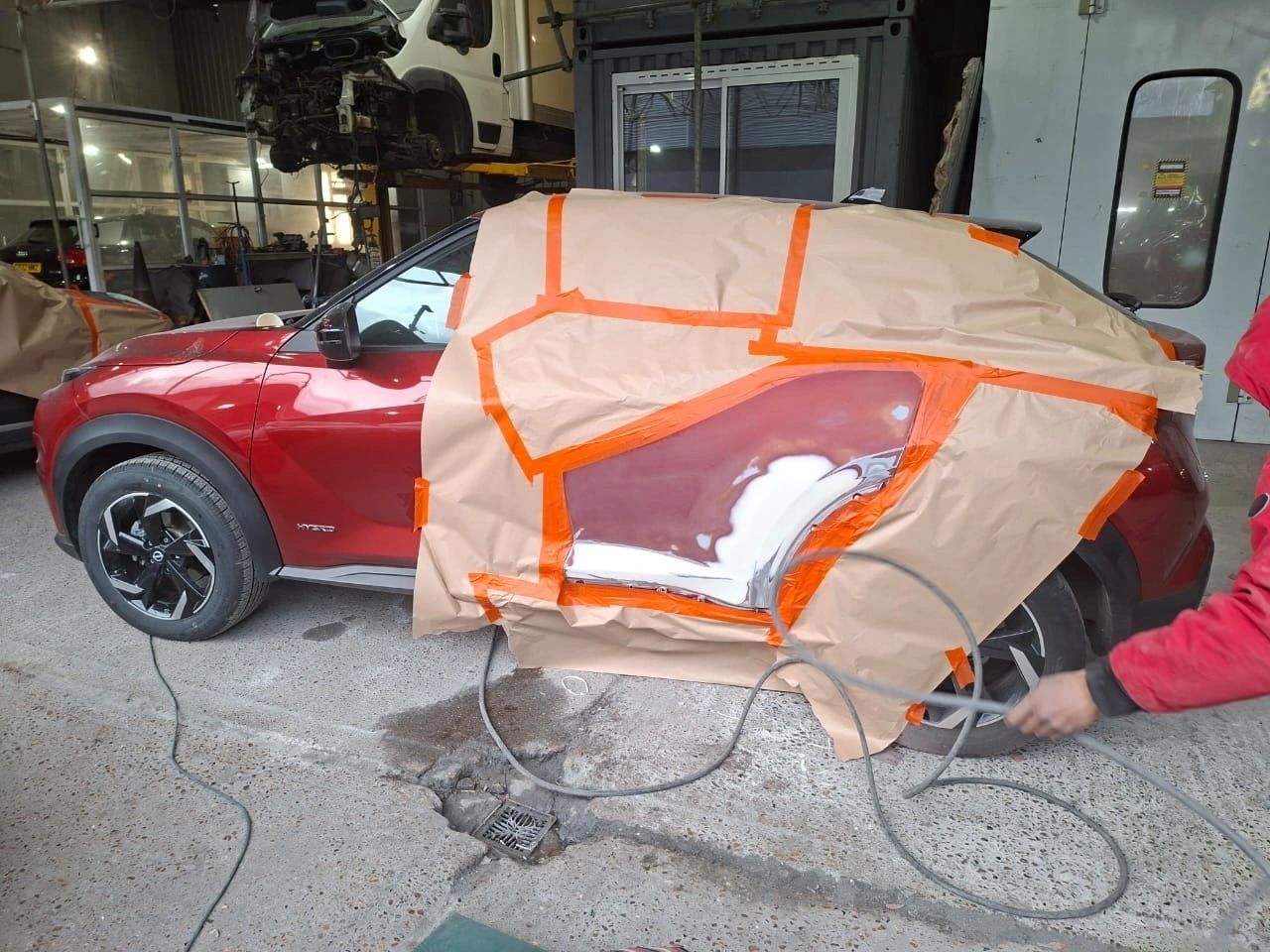
Most of a respray is preparation, not painting. The colour going on is the last and quickest part. Before that comes washing, sanding the old surface back, sorting any dents, filling and priming bare areas, masking everything that is not being painted, and several coats with drying time in between. Paint over a bad surface and every flaw underneath shows through, so the prep is where the cost and the quality both live.
Because the prep is the bulk of the labour, the price tracks how much surface there is to do and how rough that surface is to start with. That is the thread running through everything below.
What drives the cost
Five things move a respray quote more than anything else.
- How much of the car you are painting. A single panel, a few panels, or the whole car. This is the biggest factor by a long way, because it sets how many hours go into prep and masking.
- The type of paint. A flat solid colour is the cheapest to mix and apply. Metallic adds a layer of complexity. Pearlescent and special-effect finishes are harder again to lay down evenly and match, so they cost more in both material and labour.
- The state of the bodywork. Dents, scuffs, kerbed edges and rust all have to be sorted before paint goes near them. A clean, straight car is cheap to prep. A tatty one is not.
- Colour change. Keeping the same colour means painting only what shows. Changing colour means doing the door shuts, the inside of the boot and bonnet, under the fuel flap and the edges, otherwise the old colour peeks through. That is a lot more work.
- The finish you want. A tidy, sound repaint is one thing. A show-standard, glass-flat finish with the panels removed and painted off the car is another, and the hours reflect it.
Realistic UK price ranges
No garage can give you an exact figure without seeing the car, because the points above change everything. What follows are honest banded ranges for the UK in 2026, useful for working out which ballpark you are in. Treat them as a guide, not a quote.
- Single panel (one door, wing or bumper). Roughly the low hundreds. This is the most common job and often the best value, because the prep is contained to one area. Many single-panel jobs are turned around the same day.
- A few adjacent panels. Mid hundreds and up, depending on how many and whether the colour has to be blended across them so there is no visible edge.
- Full respray, same colour, solid paint. Typically four figures, often somewhere in the four-figure range once you account for proper prep on the whole car.
- Full respray with metallic or pearl, or a colour change. Higher again, because of the extra paint stages and all the hidden areas a colour change brings.
- Show-standard or full off-the-car respray. The top of the range, well into four figures and beyond, because panels come off, everything is painted separately and the standard is much higher.
The spread is wide on purpose. A faded but straight car painted the same colour sits at the cheaper end. A dented car going from white to a deep metallic blue, with rust to cut out first, sits at the top. We cannot tell you which you are without looking, which is exactly why a free in-person quote beats a phone guess.
Why a cheap respray can go wrong
A respray quote that comes in far below everyone else is usually cutting prep, and prep is the part you cannot see once the paint is on. The classic signs of a rushed job show up within a year: overspray on the rubber seals and trim, orange-peel texture in the lacquer, paint lifting at the edges, runs, and a colour that does not quite match the panels that were left alone.
The other corner that gets cut is masking and removal. Painting over a badge, a seal or a handle instead of taking it off looks fine for a week, then the edges peel. And if a garage paints straight over the early signs of rust to save time, the corrosion carries on underneath and pushes the fresh paint off from below. Once rust is involved, the right fix is to cut it out and sort the metal first, which can become a welding job rather than a paint one. We go into that in our guide on stone chips and rust.
The cheapest respray is the one done properly once. The expensive one is the one you pay for twice.
When a respray beats a wrap, and when it does not
If you want a different colour or a fresh look, a respray is not your only option. A vinyl wrap goes over the existing paint, can be removed later, and is often cheaper for a straight colour change on a car whose paint is already sound. It also protects the paint underneath, which matters on a lease car.
A respray makes more sense when the paint is faded, chipped or damaged across the car, because a wrap cannot fix what is under it. A wrap needs good paint to stick to. If the surface is poor, you fix it first or the wrap will not last. So the real question is the state of the paint you already have. We compare the two routes in detail, with costs, in car wrapping versus respray.
Respray, or just a panel repair?
People often ask for a respray when they only need a panel sorted. If the problem is one scuffed bumper or a couple of scratches, you do not need the whole car painted. The affected area is prepped, painted and blended into the panels around it, which is far cheaper and quicker. Our guide on how much it costs to fix a car scratch covers that side of things.
A full respray is for cars with widespread fading, damage across many panels, or a colour change. If that is not you, a targeted repair will save you a lot of money.
The same-day angle on single-panel work
For single-panel and small jobs, turnaround matters as much as price. Our same-day car paint service handles single panels, scuffs and bumper damage with proper colour matching, and most of these go back the same day if you drop the car off early. You get your car painted and back without it sitting in a bodyshop for a week. Larger resprays and full colour changes take longer because of the prep and drying time involved, and we will give you a realistic turnaround when we see the car.
How to get a straight price
When you bring a car to us in Tottenham Hale, we look at it, tell you honestly whether you need a full respray or just a panel, and quote on what it actually needs. The quote is free and no-obligation, and no work starts until you have agreed it. We work on cars and vans of all makes for drivers across North London, and we are open every day from 08:00 to 22:00.
If you want a respray priced up properly, call us on 020 3582 3444 or message on WhatsApp and bring the car in for a free look.
Good to know
How much does it cost to respray a whole car in the UK?+
A full respray usually runs into four figures, with the exact number depending on the paint type, the state of the bodywork and whether you are changing colour. A straight, faded car painted the same solid colour sits at the cheaper end. A dented car going to a metallic or pearl colour, or one needing rust sorted first, sits higher. We give a firm figure once we have seen the car.
Why is a colour change more expensive than keeping the same colour?+
Keeping the same colour means painting only what shows on the outside. Changing colour means doing the door shuts, the inside of the boot and bonnet, the edges and under the fuel flap, otherwise the old colour shows through whenever a door opens. That extra work adds time and material, so a colour change costs more than a same-colour respray.
Is a cheap respray worth it?+
Be careful. A quote far below the rest is usually cutting prep, which is the part you cannot see once the paint is on. The signs of a rushed job show up within a year: overspray on the seals, orange-peel texture, peeling edges and a colour that does not match. A respray done properly once is cheaper than one you pay for twice.
Should I wrap my car or respray it?+
If your paint is sound and you just want a different colour, a wrap is often cheaper, removable and protects the paint underneath. If the paint is faded, chipped or damaged, a respray is the better fix because a wrap cannot hide what is under it and needs a good surface to stick to. The state of your current paint is the deciding factor.
Get a free, no-obligation quote
Bodywork and mechanical under one roof in Tottenham Hale. Open every day, 08:00 to 22:00. Call, message on WhatsApp, or request a quote.