A dent looks like one problem, but there are two completely different ways to fix it, and they sit at opposite ends of the price scale. One leaves the original paint untouched. The other involves filler, primer and fresh colour. Which one your car needs comes down to the state of the paint and the shape of the dent, not how bad it looks at a glance. This guide explains both methods, what drives the cost, honest UK price bands, and how to work out which job you are actually looking at.
Car dent repair in the UK typically costs £75 to £150 for paintless dent removal of a small dent, rising to £200 to £450 or more where the paint has cracked and the panel needs filling and respraying.
| Dent repair type | Typical UK price |
|---|---|
| Paintless dent removal (PDR), small dent | £75 to £150 |
| PDR, larger or several dents | £150 to £300 |
| Dent with cracked paint (fill and respray) | £200 to £450 |
| Dent on an edge or body line | £250 to £500+ |
Paintless dent removal (PDR)
Paintless dent removal is exactly what it sounds like: the dent comes out and no paint is involved. A technician works the back of the panel with specialist rods, or uses glue-pull tabs from the front, and gently massages the metal back to its original shape. Because the factory paint is never disturbed, there is no colour matching, no respray and nothing to dry. A good PDR job is invisible and keeps the original finish, which matters for resale and for leased cars.
PDR suits a specific set of dents:
- Shallow dents where the paint is intact. If the surface is smooth and unbroken, with no scratch or crack in the lacquer, the metal can usually be pushed back without touching the colour.
- Door dings. The classic car-park dent from the door next to you. Small, round, paint still fine. This is PDR's home ground.
- Hail damage. Lots of small, shallow dents across a roof or bonnet. PDR handles these well and far cheaper than respraying whole panels.
- Minor bodyline dents with good access behind the panel.
Where PDR runs out of road: a dent with a sharp crease, paint that has cracked or chipped, a dent right on the edge of a panel, or anywhere a technician cannot reach the back of the metal. Stretch the metal too far and PDR will not bring it back cleanly. In those cases the traditional route is the honest answer.
Traditional dent repair (filler and respray)
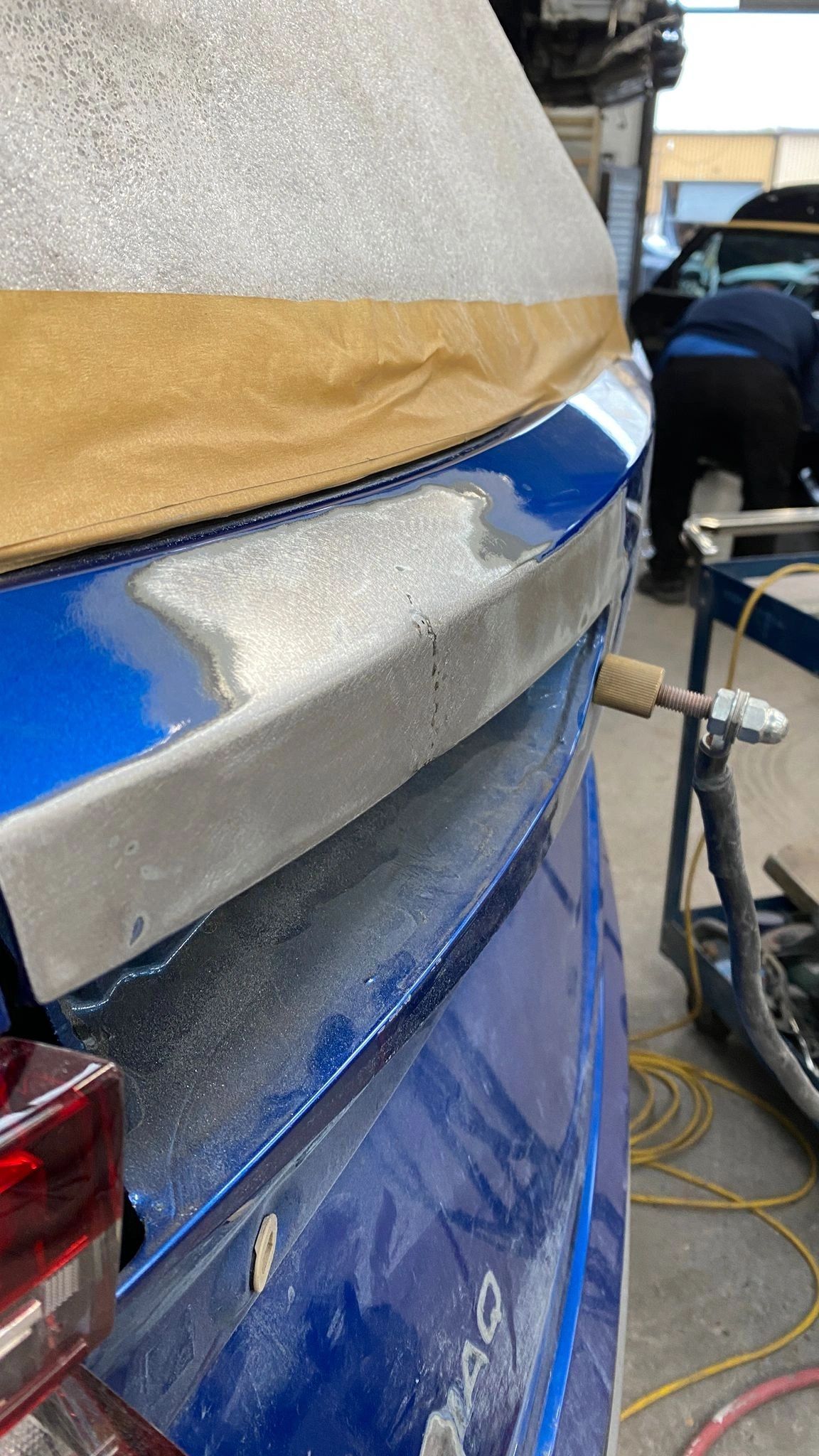
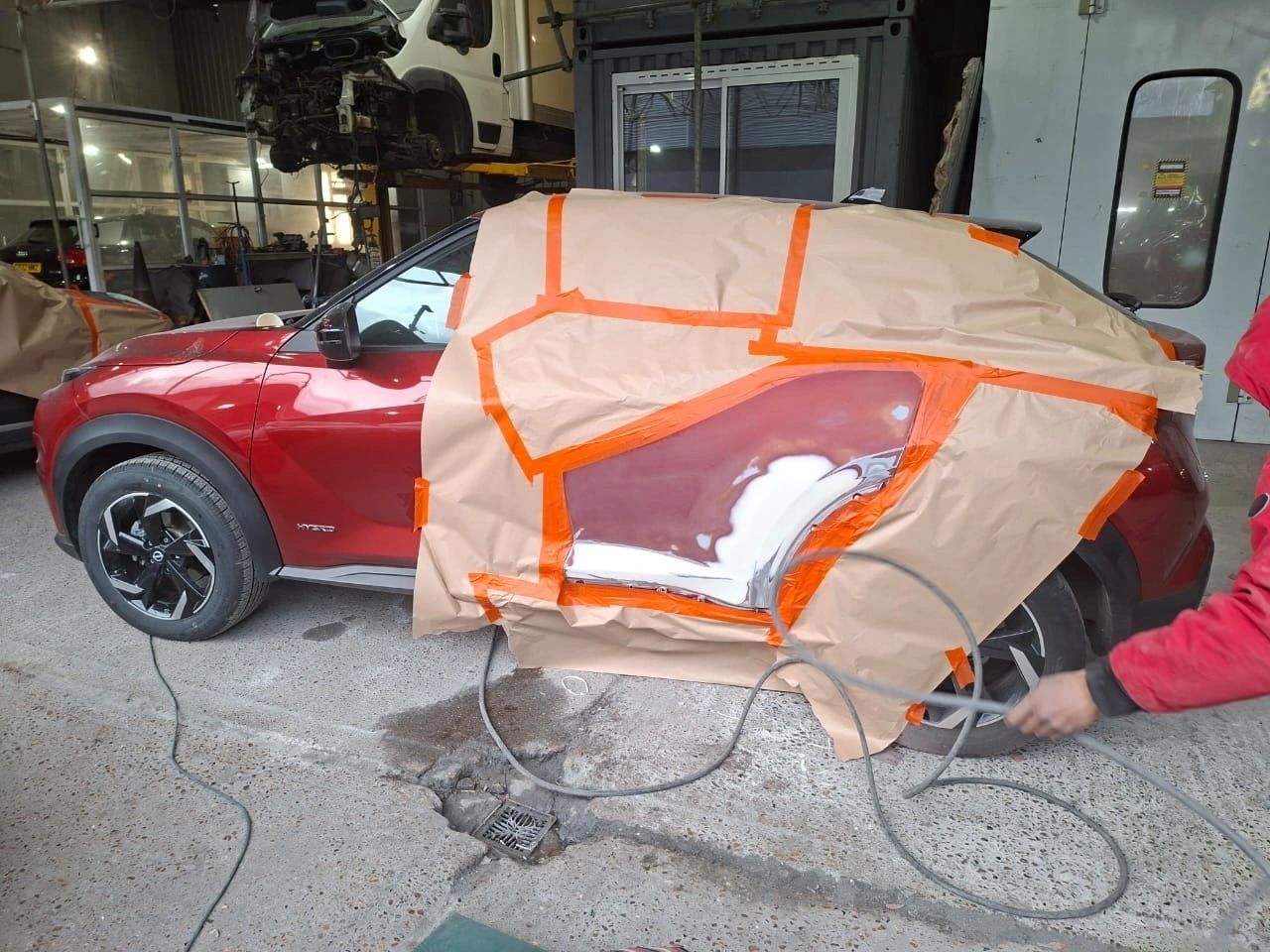
Traditional repair is the method most people picture. The dent is knocked back as close to shape as possible, then a thin layer of body filler is applied, shaped and sanded flat to rebuild the contour. The area is primed, the colour is matched to your car's paint code and sprayed, then lacquered and blended into the surrounding panel so there is no visible edge.
This is the right method when:
- The dent is creased or sharp. Once metal is folded rather than just pushed in, PDR cannot smooth it out properly.
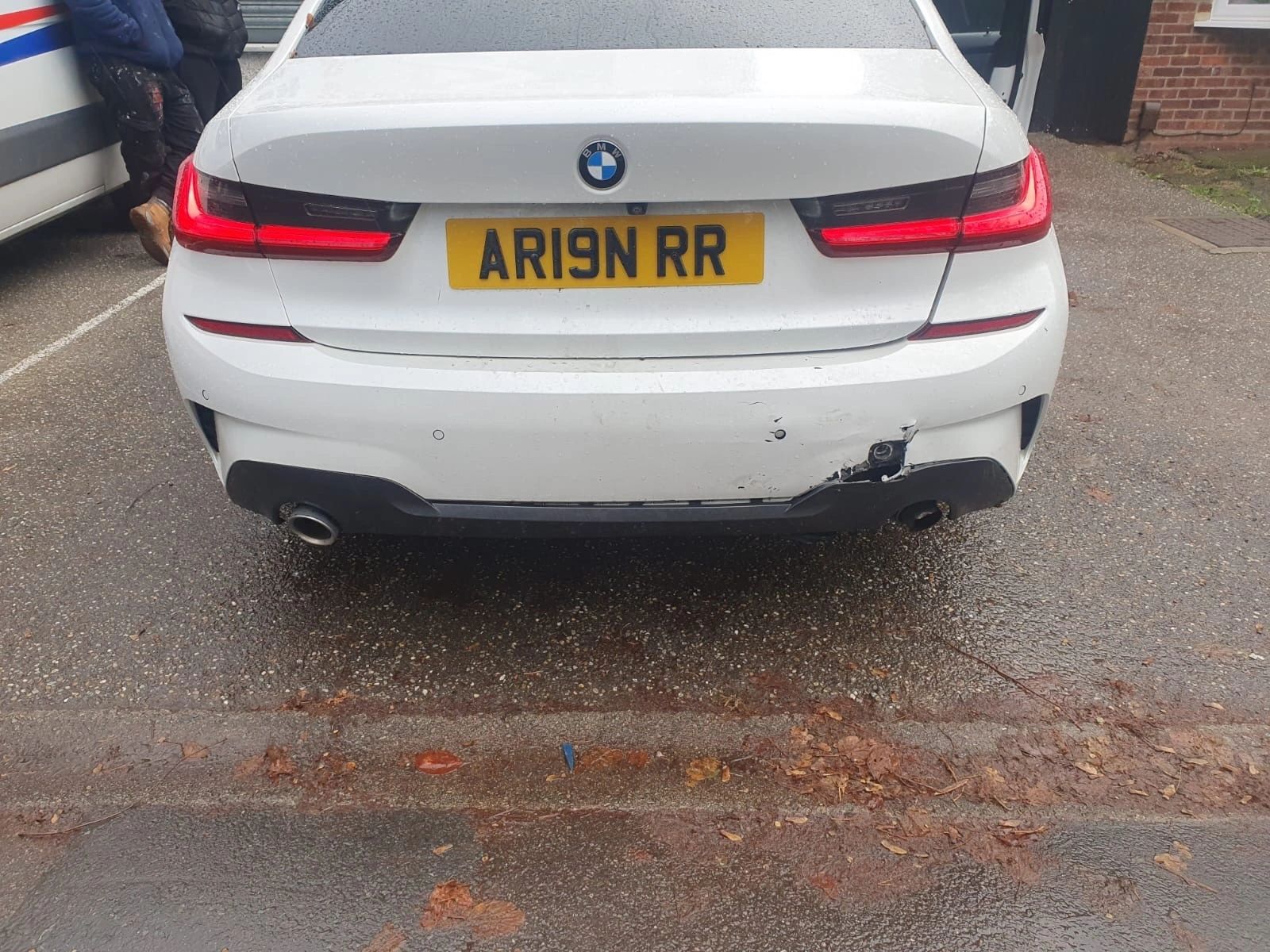
- The paint is already broken. If the dent came with a scratch, a crack in the lacquer or a chip, the panel needs paint anyway, so filler and respray is the sensible route.
- The dent sits on a panel edge or somewhere the back cannot be reached.
- There is stretched or torn metal, which sometimes needs welding work before any filler goes on.
It is more labour and more material than PDR, which is why it costs more. But it is also the only way to get certain dents looking right, and a proper filler-and-respray job is just as durable as the factory finish.
What drives the cost
Whichever method a dent needs, the same handful of things move the price:
- Size and depth. A small, shallow ding is quick. A large or deep dent takes longer to work and uses more material.
- Whether the paint is damaged. This is the big one. Intact paint can mean PDR; broken paint means a respray, and that jumps the cost.
- Location. A dent in the middle of a flat door is easy. One on a body line, a panel edge, or a curved section takes more skill and time.
- Access behind the panel. PDR needs a way in behind the metal. If that means removing a door card, a light cluster or trim, that adds labour.
- Panel material. Steel is forgiving. Aluminium, used on a lot of modern bonnets, doors and wings, holds its shape and does not push back as easily, so it is slower and more specialist work.
Honest UK price ranges
No garage can give you an exact figure without seeing the car, because the points above change everything. But here are realistic bands for the UK so you know roughly where you stand.
Paintless dent removal: a single small door ding typically runs from around 50 to 150 pounds. A larger single dent, or a few dents together, more like 150 to 300 pounds. Hail damage across multiple panels is quoted per car and runs into the hundreds depending on how many dents there are.
Traditional dent repair with filler and respray: a small to medium dent on one panel, paint included, generally sits from around 150 to 400 pounds. Larger dents, awkward locations, or a full panel respray push it from roughly 400 to 800 pounds or more, especially on metallic and pearl colours that take more care to match and blend.
The pattern is simple: PDR is cheaper because there is no paint and no drying time. The moment paint is involved, the cost steps up. Our guide on car respray cost in the UK breaks the paint side down further, and scratch repair costs covers the same logic for marks rather than dents.
How to tell which method your dent needs
You can get a fair idea before you bring the car in. Look at two things: the paint and the shape.
- Run a fingernail across the dent. If the surface is smooth and your nail does not catch on any crack or scratch, the paint is probably intact, which opens the door to PDR.
- Look at the shape in good light. A soft, rounded dent is a PDR candidate. A sharp line, a fold or a crease usually is not.
- Check where it sits. A dent in the open middle of a panel is easier than one on an edge or a tight curve.
If the paint is broken, treat it as a paint job from the start. That is not just about looks.
Why a dent that has broken the paint should be sorted first
When a dent cracks or chips the paint, it exposes bare metal underneath. Once rain and road salt reach that metal, it starts to corrode, and rust spreads under the surrounding paint where you cannot see it. A dent you could have sorted with a tidy repair turns into cutting out rust later, which costs more and takes longer. We cover that chain of events in our guide on stone chips and rust. The takeaway is the same: broken paint is a clock, so get it sealed before water does the damage.
Get it looked at
The only way to know whether your dent is a quick PDR job or a filler and respray is to have someone look at it. When you bring a car to us in Tottenham Hale, we tell you straight which method it needs and quote on that, with nothing started until you have agreed the price. Most single-panel dent jobs go back the same day if you drop the car off early. We work on cars and vans of all makes for drivers across North London with bodywork and mechanical under one roof, and we are open every day from 08:00 to 22:00.
Our same-day car paint service handles dents, scuffs and bumper damage with proper colour matching, and if a dent has stretched or torn the metal our welding work sorts it before any filler goes on. Call us on 020 3582 3444 or message on WhatsApp and bring it in for a free look.
Good to know
What is the difference between paintless dent removal and traditional repair?+
Paintless dent removal (PDR) pushes the dent back out without touching the paint, using rods or glue-pull tabs. It suits shallow dents where the paint is still intact, like door dings and hail. Traditional repair uses body filler, primer and a fresh respray, and is needed when the dent is creased, on a panel edge, or the paint is already broken. PDR is cheaper because there is no paint involved; traditional repair costs more but fixes dents PDR cannot.
How much does it cost to repair a small dent in the UK?+
A small door ding fixed with paintless dent removal typically runs from around 50 to 150 pounds. A small to medium dent that needs filler and a respray generally sits from around 150 to 400 pounds, because paint and colour matching are involved. We give you a firm price once we have seen the car, with nothing started until you agree it.
Can any dent be fixed with paintless dent removal?+
No. PDR works on shallow dents where the paint is smooth and unbroken, with good access behind the panel. It cannot fix a sharp crease, a dent on a panel edge, stretched metal, or any dent where the paint has cracked or chipped. Those need traditional filler and respray. We tell you which method your dent needs before quoting.
Should I fix a dent that has chipped the paint straight away?+
Usually yes. A dent that has broken the paint exposes bare metal, and once water and road salt reach it the area starts to rust and spreads under the surrounding paint where you cannot see it. Catching it early means a tidy repair instead of cutting out corrosion later. It also keeps the car looking right for resale or a lease handback.
Get a free, no-obligation quote
Bodywork and mechanical under one roof in Tottenham Hale. Open every day, 08:00 to 22:00. Call, message on WhatsApp, or request a quote.