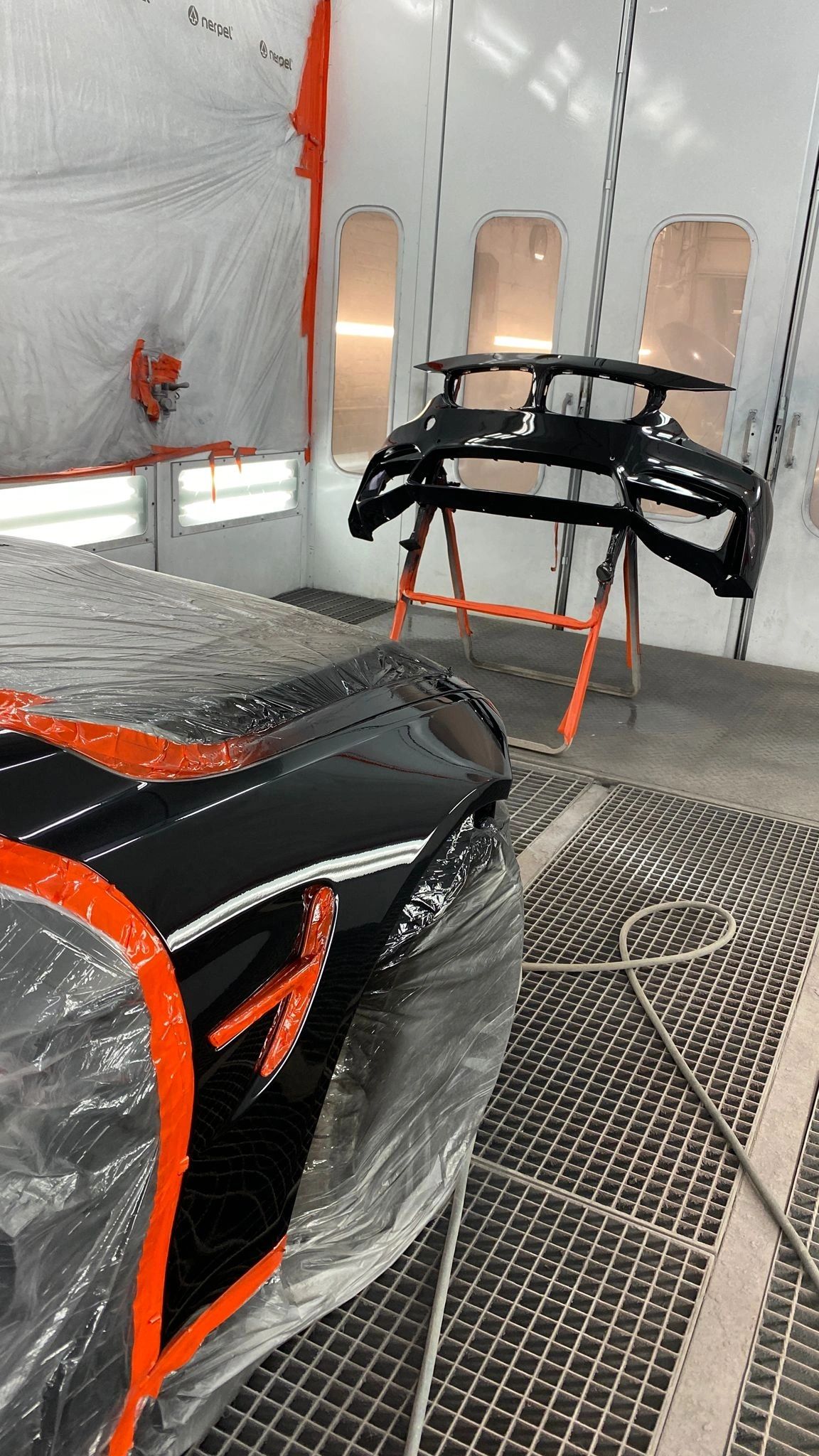
Changing the colour of your car is one of those jobs where the price you are quoted can swing wildly, and most people do not know why. It comes down to two things: which route you take, and how thorough the job is. There is also a legal side that gets skipped over a lot, so we will be clear about that too. You have to tell DVLA when you change your car's colour. It is free, it takes five minutes, and skipping it causes more trouble than it saves.
This guide covers the two ways to change a car's colour, what each one costs in the UK, why a cheap colour change usually looks cheap, and exactly what you need to do with the paperwork and your insurer.
Two ways to change the colour
There are really only two honest routes to a different colour: respray the car, or wrap it in vinyl. They are not the same thing, and they suit different people.
- A full respray changes the actual paint on the car. It is permanent, it looks and feels like factory paint when it is done properly, and it is the right choice if you want the colour to last for the life of the car. Done right, it also means the inside edges of the doors, the bonnet shut and the boot are painted to match, so the car reads as that colour from every angle.
- A vinyl wrap is a printed film laid over the existing paint. It is removable, usually cheaper, and protects the original paint underneath. The factory colour stays exactly as it was beneath the film, which is good for resale and good if you change your mind. A wrap does not last forever though, and it is not as bulletproof as paint against stone chips and heavy wear.
We go deeper on the trade-offs in our guide on car wrapping versus respray. The short version: pick paint if you want it permanent and seamless, pick wrap if you want it cheaper, reversible, and you are happy to redo it in a few years.
What a colour change respray costs
Honest banded ranges, because anyone quoting an exact figure without seeing the car is guessing. A colour change respray in the UK usually falls somewhere in these brackets, depending on the size of the car, the colour you are going to and coming from, and how much prep the bodywork needs first:
- Entry level, smaller car, straightforward colour: often in the region of £1,500 to £2,500.
- Mid range, most family cars, a proper job including the shut lines: typically £2,500 to £4,500.
- Larger cars, awkward colours, or paint that needs a lot of correction first: £4,500 and up.
Two things move the number the most. The first is going from a dark colour to a light one, or the other way, because that needs more coats to cover properly. The second is whether the old paint and bodywork are sound. Dents, rust and flaking lacquer all have to be sorted before any new colour goes on, and that prep is where a lot of the labour sits. We cover the prep-and-paint pricing more generally in our guide on car respray cost in the UK.
Why the cheap colour change looks wrong
This is the part that separates a proper colour change from a bargain one. A car is not just its outer panels. Open a door and you see the door shut, the jamb and the inner edge. Open the bonnet and you see the slam panel and the inner wings. Lift the boot and you see the inner lip and the underside of the lid. On a factory car, all of that is the body colour.
A cheap colour change paints the outside only and leaves all those hidden areas in the original colour. So a car that looks orange from across the street flashes its old silver every time you open a door. It looks exactly like what it is: a quick respray, not a real colour change. It is the single biggest tell that a job was done on the cheap.
Painting the jambs, shuts, bonnet shut and boot is more work and more cost, but it is the difference between a colour change and a paint job that fools nobody.
It also hurts resale. Buyers and trade alike know to open the doors and the bonnet. A two-tone surprise underneath knocks money off and makes the car harder to sell, because it reads as a cut corner. If you are paying for a colour change, paying for the shut lines to be done is the part that protects the value.
The legal bit: you must tell DVLA
When you change your car's colour, you have to tell DVLA. This is not optional and it is not a grey area. The colour is recorded on your V5C logbook (the registration document), and that record has to match the car.
The good news is that it is simple and it is free. You update the colour on your V5C, either through the DVLA online service or by filling in the relevant section of the paper logbook and posting it back. DVLA updates the record and, where needed, sends you an updated V5C. There is no charge for changing the recorded colour.
Why it matters in practice:
- Police ANPR and roadside checks. Number plate cameras and officers can flag a car whose colour does not match its record. A silver car on the system that is now bright orange looks wrong, and that is exactly the kind of mismatch that gets you pulled over for no other reason.
- Selling the car. A buyer doing their checks will see a colour on the logbook that does not match the car in front of them. That raises questions you do not want, and it can stall a sale.
- It is the law. Keeping your V5C accurate is your responsibility as the registered keeper, and the colour is part of that.
Wrap or paint, the rule is the same in spirit. A full vinyl wrap that changes the car's apparent colour is treated like a colour change for the logbook, so the safe move is to update the record to the colour the car now appears. If in doubt, update it. It costs nothing and it removes the hassle.
Does a colour change affect insurance?
Yes, and you need to tell your insurer. A colour change is a modification as far as insurance goes, and not declaring it can affect a claim. Most insurers note the new colour with no change to your premium, but a few treat certain finishes or wraps as a modification that does carry a small adjustment. Either way, a quick call or message to your insurer before or just after the work keeps you covered. It is a five minute job that protects you if you ever need to claim.
Do the two admin jobs together and you are sorted: update the V5C with DVLA, and tell your insurer. Both are quick, one is free, and between them they save you the headache later.
Getting a straight quote
No garage can give you an exact colour change price down the phone, because the car, the colour and the state of the bodywork all change the number. What you should get is a clear, free, no-obligation quote once someone has seen the car, with the shut lines and jambs spelled out so you know whether you are paying for a real colour change or just the outside.
At our workshop in Tottenham Hale we do full colour change resprays with the jambs, shuts, bonnet and boot done properly, and we fit vinyl wraps if you would rather keep it removable. Our car paint team handles the spray work and our car wrapping service covers the vinyl side, so we can talk you through both and you pick what suits. We work on cars and vans of all makes for drivers across North London, and we are open every day from 08:00 to 22:00.
If you are thinking about a colour change, call us on 020 3582 3444 or message on WhatsApp and bring the car in for a free look and an honest price.
Good to know
Do you have to tell DVLA about a colour change?+
Yes. When you change your car's colour you must update the colour recorded on your V5C logbook with DVLA. It is free and can be done through the DVLA online service or by posting the paper logbook. Keeping the record accurate is your responsibility as the registered keeper, and it stops mismatches showing up on police ANPR or when you sell the car.
Is a respray or a wrap cheaper for a colour change?+
A vinyl wrap is usually cheaper than a full respray and it is removable, so the original paint stays underneath. A respray costs more but is permanent and looks like factory paint when the shut lines and jambs are done. Pick a wrap if you want cheaper and reversible, pick paint if you want it permanent and seamless.
Why does a cheap colour change look wrong?+
A cheap job paints the outer panels only and leaves the door shuts, jambs, bonnet shut and boot in the original colour. So the car flashes its old colour every time you open a door. A proper colour change paints those hidden areas too, which is more work but is the difference between a real colour change and a quick respray that fools nobody.
Does changing my car's colour affect my insurance?+
It can, so you should tell your insurer. A colour change counts as a modification for insurance. Most insurers simply note the new colour with no change to your premium, but not declaring it can affect a claim. A quick call to your insurer before or just after the work keeps you covered.
Get a free, no-obligation quote
Bodywork and mechanical under one roof in Tottenham Hale. Open every day, 08:00 to 22:00. Call, message on WhatsApp, or request a quote.